Buying Guides
 Huayuan Technical Team
·
June 15, 2026
·
8 min read
Huayuan Technical Team
·
June 15, 2026
·
8 min read
Blog
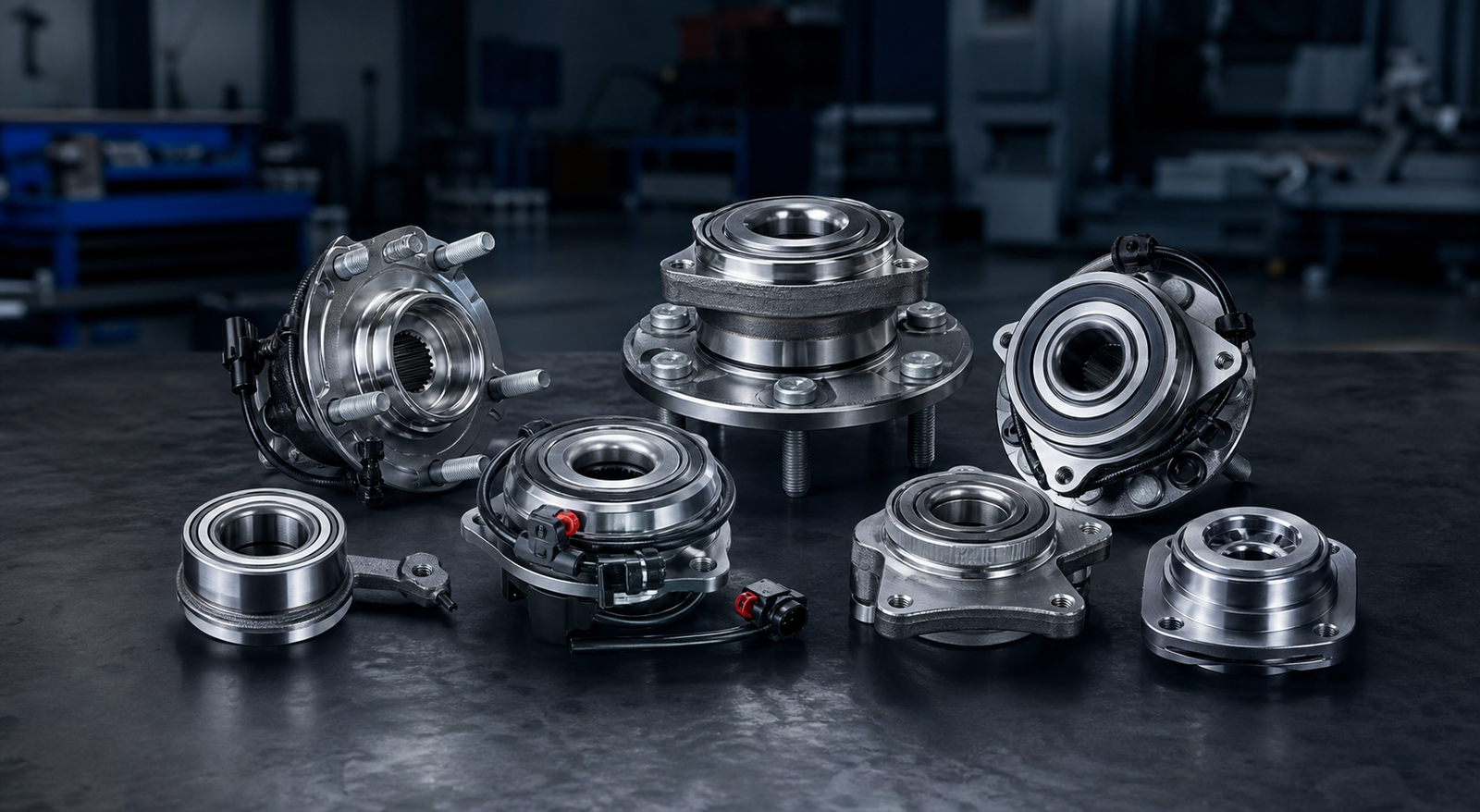
Complete guide comparing three generations of wheel hub bearings — differences, compatibility, and how to choose the right one.
Huayuan Technical Team
·
June 15, 2026
·
8 min read
What Are Wheel Hub Bearings?
Wheel hub bearings are critical automotive aftermarket components that allow your vehicle's wheels to rotate smoothly while supporting the overall weight metrics of the automobile structure. Beyond managing standard physics forces, they also play a crucial role in modern electronic systems layout—specifically balancing ABS (Anti-lock Braking System) speed signal tracking functionalities across modern driving platforms seamlessly.
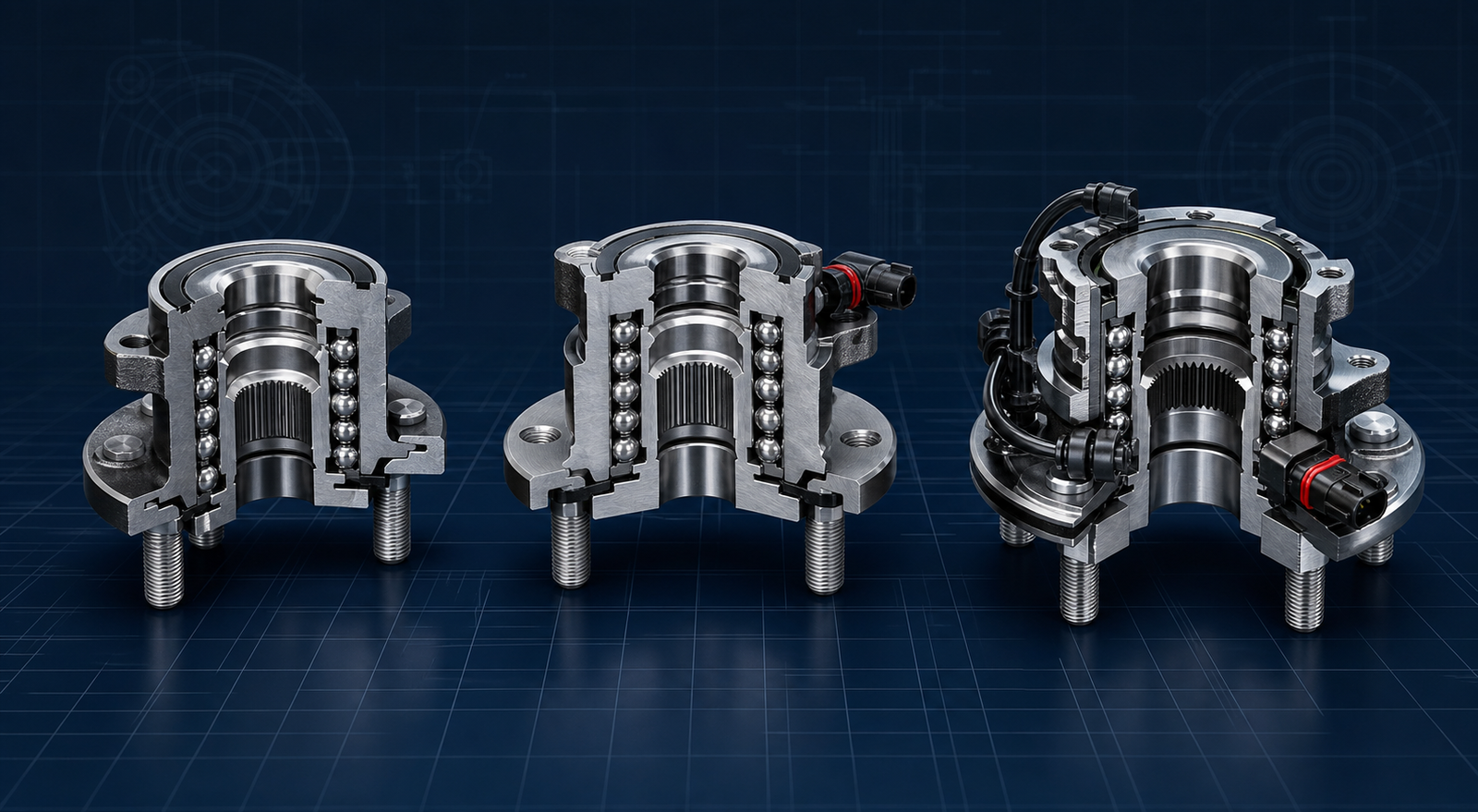
*Cross-section diagram showing internal engineering architecture inside a rolling wheel hub unit assembly*
Over the past three decades, wheel hub bearing design has evolved dynamically through three distinct engineering generations. Each iteration directly fuses additional integration capabilities, removing handling complexity for mechanics while tightening performance boundaries. Knowing which generation architecture maps precisely to your business requirements is vital for selecting the correct part inventory lines.
Gen 1: The Classic Bearing
First-generation wheel hub bearings (Gen 1) use the traditional core layout design framework. They function as a separate standalone double-row ball or tapered roller assembly component that demands manual mechanical pressure fitting directly onto the wheel steering knuckle casing or axle shafts profile.
Key characteristics mapping Gen 1 assemblies:
- Completely detached separate bearing core from the outer wheel hub flange profile.
- Absence of built-in embedded internal wheel speed ABS tracking hardware sensors.
- Requires heavy hydraulic shop pressing equipment inputs during field installation.
- Extremely common on global vehicular passenger builds rolled out before the year 2000.
Gen 1 components are typically tracked down across classic vehicle lines and select rigid light commercial truck models. While they maintain an affordable entry cost profile point for parts wholesalers, they demand higher workshop installation labor times because of the complex press-fit integration steps required.
Technical Recommendation: Managing volume fleet allocations for older vehicle channels? Browse our complete Gen 1 factory selection layout catalog here →
Gen 2: Integrated Hub Unit
Second-generation wheel hub units (Gen 2) innovate forward by directly integrating the internal rolling bearing track with the outer structural mounting wheel flange housing layout into one single combined component block. This removes complex manual hub alignment setups during shop installation operations.
Key characteristics mapping Gen 2 assemblies:
- Bearing track paths and structural wheel hub mounting flange elements combined together.
- Direct bolt-on field installation sequences (completely bypassing standalone internal pressing work).
- No integrated inside sensor elements (functions primarily alongside external chassis mounted sensor probes).
- Dominates global consumer vehicle platforms produced between the years 2000 and 2010.
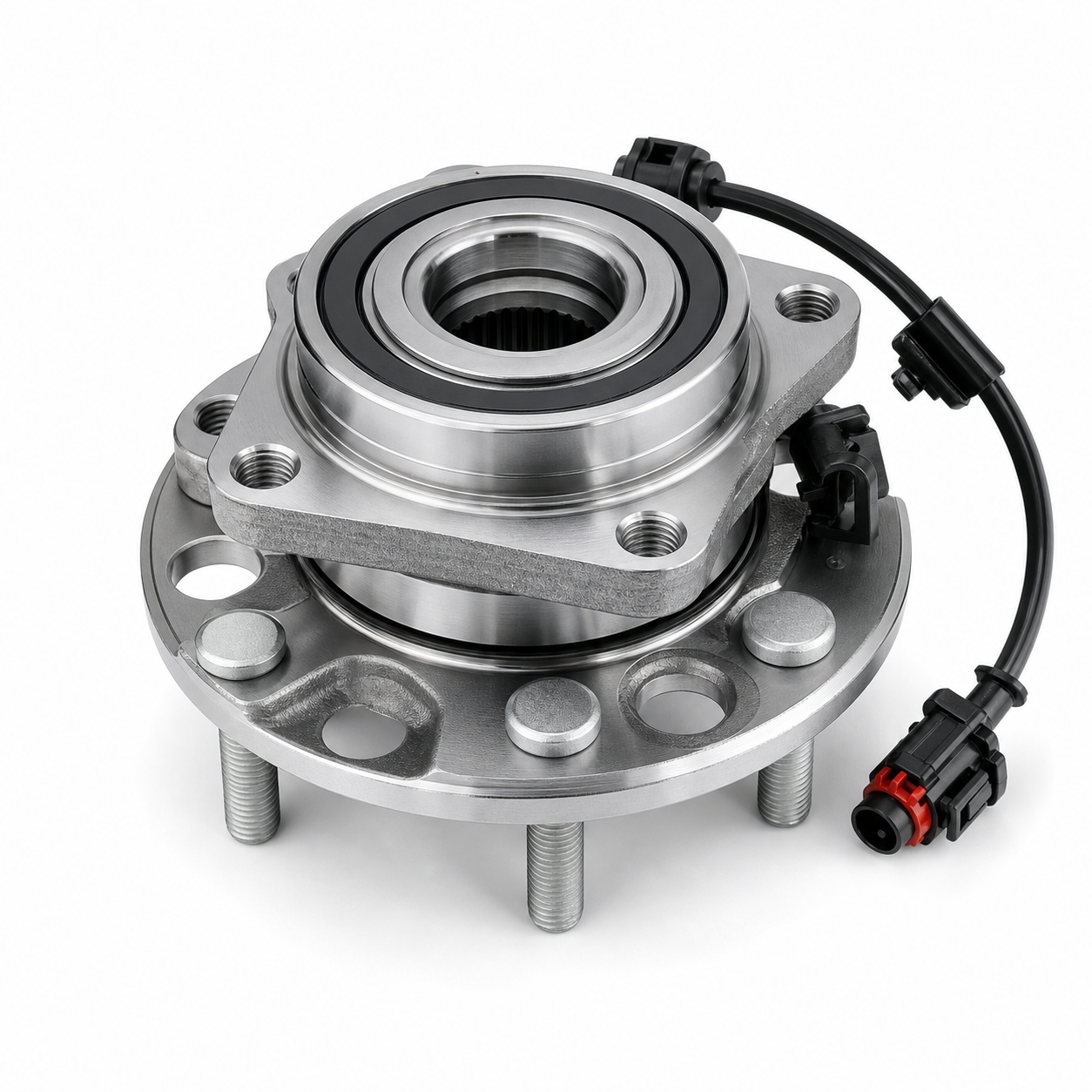 *Second generation wheel hub unit featuring a machined integration layout mounting flange mechanism*
By blending the wheel flange element into the bearing manufacturing assembly, our Gen 2 models reduce runout deviations. This structural update keeps wheels spinning true and helps eliminate structural vibration issues at higher driving speeds.
Gen 3: ABS-Integrated Assembly
Third-generation wheel hub units (Gen 3) deliver top-tier structural integration. This design merges the rolling elements, inner and outer mounting flange tracks, and a pre-calibrated digital anti-lock wheel speed sensor configuration into one pre-sealed bolt-on component framework.
Key characteristics mapping Gen 3 assemblies:
- Bearing structure, dual flanges, and ABS tracking sensor unified inside a single hub housing.
- Simple, streamlined bolt-on installation on the steering knuckle frame.
- Pre-tested, factory-calibrated electronic ABS digital magnetic wheel sensor configuration.
- Standard component layout choice for global auto brands from 2005 onwards.
- The highest volume replacement part profile group inside the global automotive aftermarket today.
Need to verify fitment variables against bulk warehouse distribution inventory rules?
Use Our 4S Level VIN Matching System Layer →Our advanced Gen 3 hub units are factory sealed with high-performance automotive grease and multi-lip structural seals. This protection keeps dirt and water out, keeping components quiet and ensuring a long service life on the road.
Key Differences Comparison Table
Review this breakdown table mapping technical engineering parameters across the three structural design levels side-by-side:
| Design Feature Attribute | Gen 1 Architecture | Gen 2 Architecture | Gen 3 Architecture |
|---|---|---|---|
| Core Component Layout | Standalone Independent Bearing | Bearing Fused with Hub Flange Element | Dual Flanges + Pre-Calibrated ABS Sensor |
| ABS Sensor Orientation | No Sensor System Support | External Knuckle Probe Tracking | Integrated Magnetic Internal Encoder Track |
| Installation Procedure Requirement | Hydraulic Shop Pressing Process | Direct Knuckle Bolt-On Application | Direct Knuckle Bolt-On Application |
| Typical Vehicle Production Era | Pre-2000 Vehicular Builds | 2000 - 2010 Automotive Builds | 2005+ Current Production Builds |
| Shop Replacement Task Difficulty | High (Requires Machining Gear) | Low (Simple Fastener Hand Tools) | Low (Simple Fastener Hand Tools) |
| Wholesale Price Point Bracket | $ Economy Baseline Cost | $$ Balanced Volume Range Value | $$$ Premium Advanced System Price |
| Active Huayuan Factory Supply Models | 120+ Part Profiles Ready | 180+ Part Profiles Ready | 200+ Part Profiles Ready |
How to Identify Your Bearing Type
To identify your wheel assembly generation layer quickly, follow these four practical field diagnostics check steps:
- Audit the Vehicle Model Year Data: Vehicles built before 2000 typically use Gen 1 parts. Cars built between 2000 and 2010 often use Gen 2 components, while vehicles from 2005 onwards mostly rely on Gen 3 assemblies.
- Scan for Electronic ABS Lead Wiring: Inspect the rear wheel assembly block area. If there is an insulated connection harness wire plugging directly into the face or base of the hub body, you are handling a Gen 3 configuration.
- Examine the Outer Flange Configuration: If the replacement bearing unit has a wide integrated metal plate with bolt pass-through holes to mount directly onto the axle face without needing an independent hub body, it is a Gen 2 or Gen 3 variant.
- Submit Your Target Fleet VIN Data: Share your list of vehicle identification numbers with our export team. Our database matches your requirements with 99.5% accuracy to determine the correct parts lines needed.
Which Generation Do You Need?
*Wholesale Procurement Decision Flowchart mapping parts selection rules*
While most modern vehicle platforms built after 2005 rely heavily on Gen 3 hub configurations, select commercial fleets and utility passenger vans use Gen 2 variants with independent external hub speed sensor arrays. To prevent order discrepancies across your supply chain networks, always cross-check your needs using these validation steps:
- Cross-reference the original vehicle OEM reference part numbers.
- Forward your master VIN spreadsheet to our tech support desk for validation.
- Have your warehouse receiving team visually inspect a pull sample from the fleet's current hub components.
Frequently Asked Technical Questions
Can I use a Gen 1 bearing to replace a worn Gen 2 hub assembly?
No. Gen 1 and Gen 2 configurations feature entirely different housing shapes and mounting structures. A Gen 1 part lacks the integrated mounting flange required to bolt onto a steering knuckle built for Gen 2 assemblies. They cannot be interchanged.
What causes integrated Gen 3 electronic ABS sensors to fail early?
Early ABS encoder failure is usually caused by excessive road heat, salt water exposure tracking past compromised outer seals, or impact force damage from using heavy power air impact tools during installation instead of calibrated manual torque tools.
Do Gen 2 and Gen 3 hub assemblies require grease packing before installation?
No. Both Gen 2 and Gen 3 hub assemblies are precision factory sealed and pre-lubricated with specific high-temperature grease formulas designed to last the full lifecycle of the part. Attempting to open or grease these components will void your factory warranty.
Where can I check general part dimensions or additional FAQs?
For standard trade rules, delivery times, or product certifications, browse our comprehensive global distribution FAQ support channel here.
Related Knowledge Guides